Contact me.
info@99plussystem.com

Key Management Trends 2026: How Smart Cabinets Are Transforming Asset Control
Explore the top 2026 key management trends reshaping enterprise asset control. See how cloud smart key cabinets, API integration, private deployment, and AI security analytics eliminate manual management risks.
Physical key and asset management has long been one of the most overlooked security blind spots for global enterprises. Across fleet logistics, government facilities, healthcare campuses, manufacturing plants, and multi-branch hotel groups, outdated manual key handling continues to cause operational bottlenecks, security loopholes, and compliance failures. Unrecorded key handovers, untraceable asset access, human error, and missing audit trails cost businesses thousands of working hours and hidden security risks every year.
As enterprise digital transformation accelerates in 2026, traditional mechanical key boxes and paper-based logbooks are being completely phased out. Modern businesses are shifting toward intelligent, data-driven, fully auditable smart key cabinet systems. This article breaks down the five most influential key management trends of 2026, explaining how upgraded smart key solutions are redefining enterprise physical asset security and standardized control worldwide.
1. Cloud & Mobile-Centric Remote Management Becomes Standard Operation
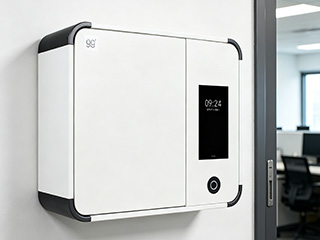
In 2026, on-site-only key management has become obsolete for multi-location enterprises. The fastest-growing industry trend is centralized cloud key asset management, allowing facility administrators to control all key cabinet devices across different cities, branches, and sites from one unified web dashboard.
Paired with dedicated iOS and Android mobile applications, security teams can monitor real-time key status, check borrowing and returning records, review staff access behavior, and receive instant abnormal alerts anytime, anywhere. This cloud-mobile integration completely eliminates the limitations of on-site management, making cross-regional asset supervision efficient and centralized.
Furthermore, modern smart key cabinets support stable offline operation. Even during temporary network outages, all key access actions are automatically recorded locally. Once the network recovers, full data synchronization is completed without missing a single record, ensuring 24/7 reliable operation for critical industrial and public facilities.
2. Multi-Factor Authentication Redefines Enterprise Security Thresholds
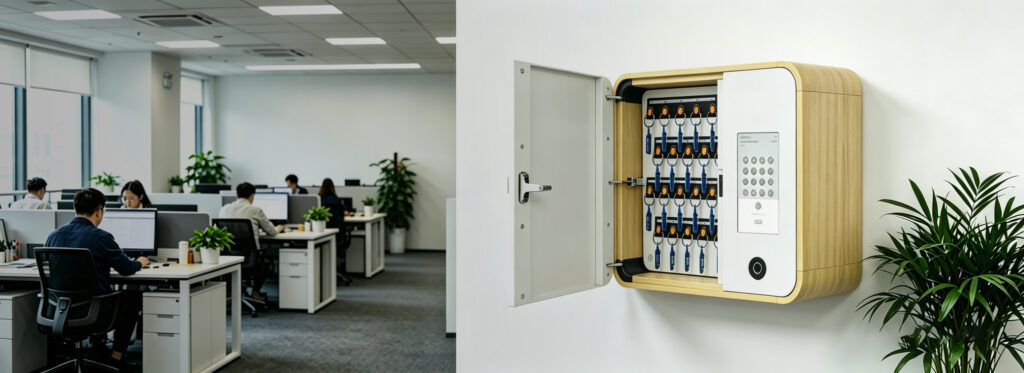
Single-password or single-card access can no longer meet modern enterprise security standards. In 2026, layered multi-factor authentication has become the baseline requirement for high-security key management scenarios, including government institutions, hospitals, fleet depots, and restricted industrial zones.
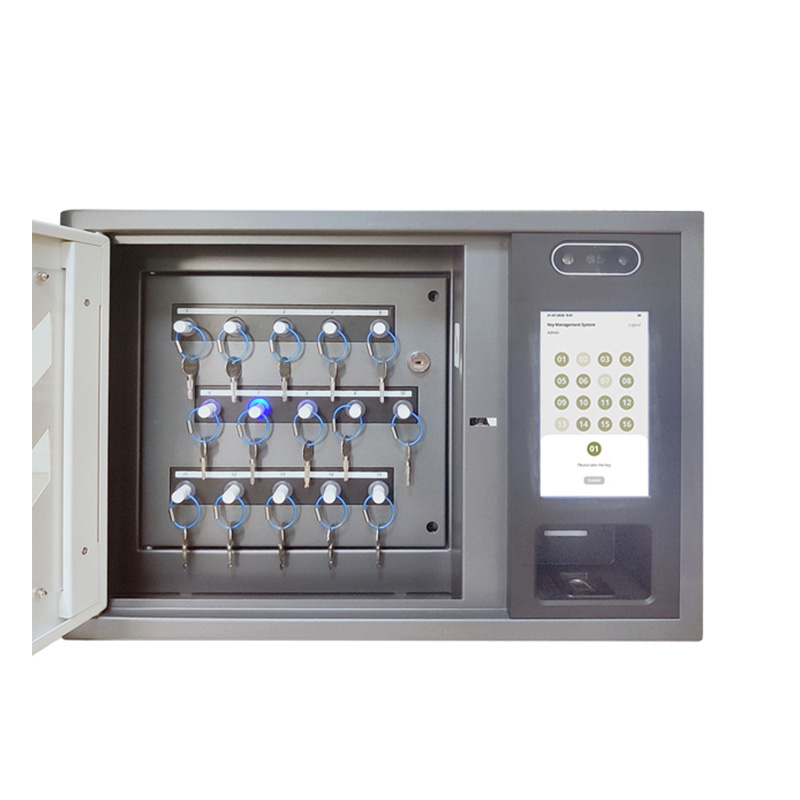
Leading smart key cabinet solutions support flexible combinations of RFID card verification, fingerprint recognition, and PIN code access. Enterprises can set differentiated authentication rules based on key sensitivity and area security levels. High-level restricted keys require dual or triple verification, effectively preventing credential sharing, unauthorized access, and private key borrowing.
Every access behavior is tied to an independent staff identity, achieving full-personnel traceability and zero ambiguous responsibility — a critical upgrade for compliance-oriented organizations.
3. AI-Powered Anomaly Monitoring & Full Lifecycle Audit Trails
Audit readiness and risk prevention have become core purchasing drivers in 2026. Traditional manual sorting of key logs is inefficient, error-prone, and unable to support modern enterprise compliance inspection standards. In contrast, new-generation smart key management systems provide fully automatic, tamper-proof full lifecycle audit tracking.
Each key checkout, return, and access attempt is automatically recorded with precise timestamps, user information, and device data. Beyond basic logging, intelligent systems now integrate AI anomaly analysis to intelligently screen high-risk behaviors, including off-hours key access, frequent authentication failures, and abnormal batch key retrieval.
Security managers no longer need to manually filter massive log data. The system actively identifies risks and pushes alerts, greatly improving security response efficiency and simplifying annual compliance audits.
4. Open API Connectivity & Private On-Premises Deployment Become Enterprise Must-Haves
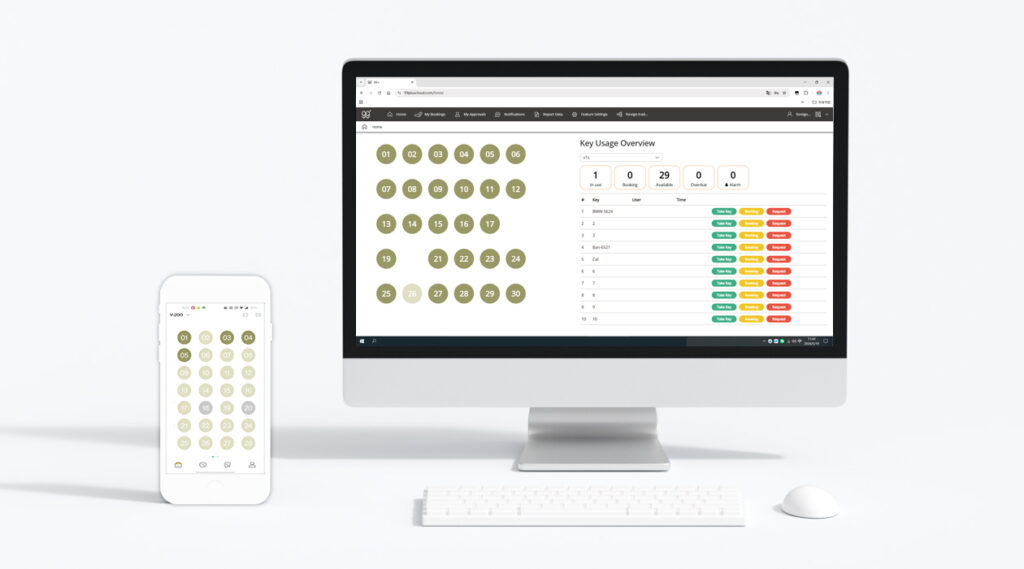
2026 marks the complete elimination of isolated, standalone hardware systems. Large enterprises and public institutions no longer purchase single-function key cabinets — they demand deeply integrable, compliant, and deployable enterprise-level asset management platforms.
Open API compatibility has evolved from an optional feature into a rigid industry standard. Modern smart key systems support standardized API interfaces to achieve secure two-way data synchronization with mainstream enterprise software, including fleet management systems, facility CMMS maintenance platforms, property management systems, and corporate HR systems. This integration eliminates data silos, unifies asset management workflows, and enables key data to serve overall enterprise operational decision-making.
To adapt to global data security laws and local data residency requirements, private on-premises deployment has become another core trend. Unlike public cloud solutions that store data on third-party servers, localized private deployment stores all operation logs, access records, and user data on the enterprise’s internal server. This fully meets the strict data confidentiality requirements of government, healthcare, military-grade security, and high-end manufacturing projects.
Dual deployment modes (cloud + private local server) and flexible API interoperability make modern smart key cabinets highly adaptable for global enterprise large-scale deployment.
5. Modular Scalable Hardware & Global Multilingual Adaptation
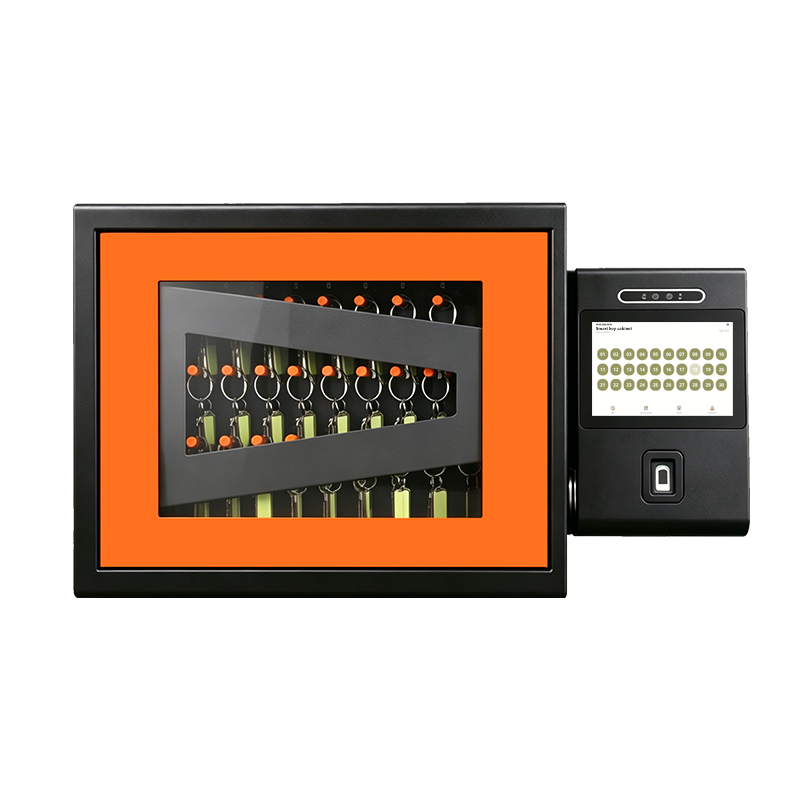
Enterprise asset scales are constantly expanding, and rigid fixed-capacity key cabinets can no longer match business growth. In 2026, modular scalable hardware design has become mainstream, allowing enterprises to flexibly expand key storage slots according to actual demand, avoiding equipment replacement waste and lowering long-term upgrade costs.
For multinational enterprises and cross-border institutions, multilingual system interfaces and localized after-sales support are essential evaluation indicators. Excellent smart key management solutions support multi-language switching and adapt to different regional management habits, helping global teams achieve unified standardized key asset control.
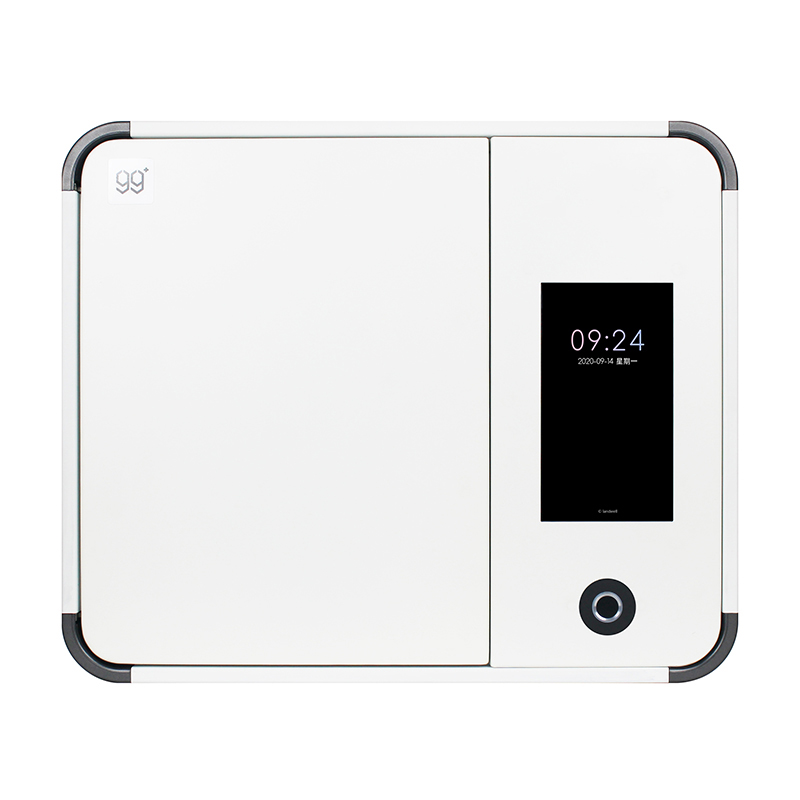
With over 10 years of professional manufacturing experience, ISO certification, and successful deployment in more than 100 countries, 99Plus provides stable, scalable, and compliant smart key cabinet hardware and software systems suitable for all industry scenarios.
Conclusion: Smart Key Management Becomes Enterprise Infrastructure in 2026
Key management is no longer a trivial administrative task — it has become an important part of enterprise physical asset security, data compliance, and refined operational management. The 2026 industry trends clearly show that cloud centralization, multi-factor security verification, AI intelligent risk identification, API cross-system integration, and private data deployment are rewriting the rules of enterprise key control.
Enterprises still relying on manual key management are facing increasing security risks and compliance pressure. Upgrading to a professional smart key cabinet system is no longer an optional optimization, but a necessary investment for long-term safe and stable operation.
If you are looking for a scalable, compliant, and integrable enterprise key management solution, contact 99Plus to customize your exclusive smart key cabinet system and build a modern intelligent asset control system for your organization.
FAQ
Q1: What are the biggest advantages of 2026 smart key management systems compared with traditional key boxes?
A1: Modern smart solutions provide cloud remote management, full automatic audit trails, multi-factor security verification, and API integration capabilities. They eliminate manual errors, solve data silos, and meet modern enterprise compliance requirements.
Q2: Can smart key cabinets connect with existing enterprise management software?
A2: Yes. The 99Plus system supports standard open API interfaces for seamless docking with fleet management, CMMS, property management, and other enterprise platforms to realize unified workflow management.
Q3: Is private deployment available for data-sensitive industries?
A3: Absolutely. 99Plus supports full private on-premises deployment, keeping all data locally stored to meet strict data security and data residency requirements for government, healthcare, and manufacturing enterprises.
Q4: Can the system work stably for multi-site global enterprise management?
A4: Yes. The system supports multi-language switching, cross-region cloud centralized management, and modular expansion, perfectly adapting to large-scale global enterprise deployment.
[Contact 99Plus for a Custom Manufacturing Key Management Solution →]